What is a Girl Worth?
by Rachael Denhollander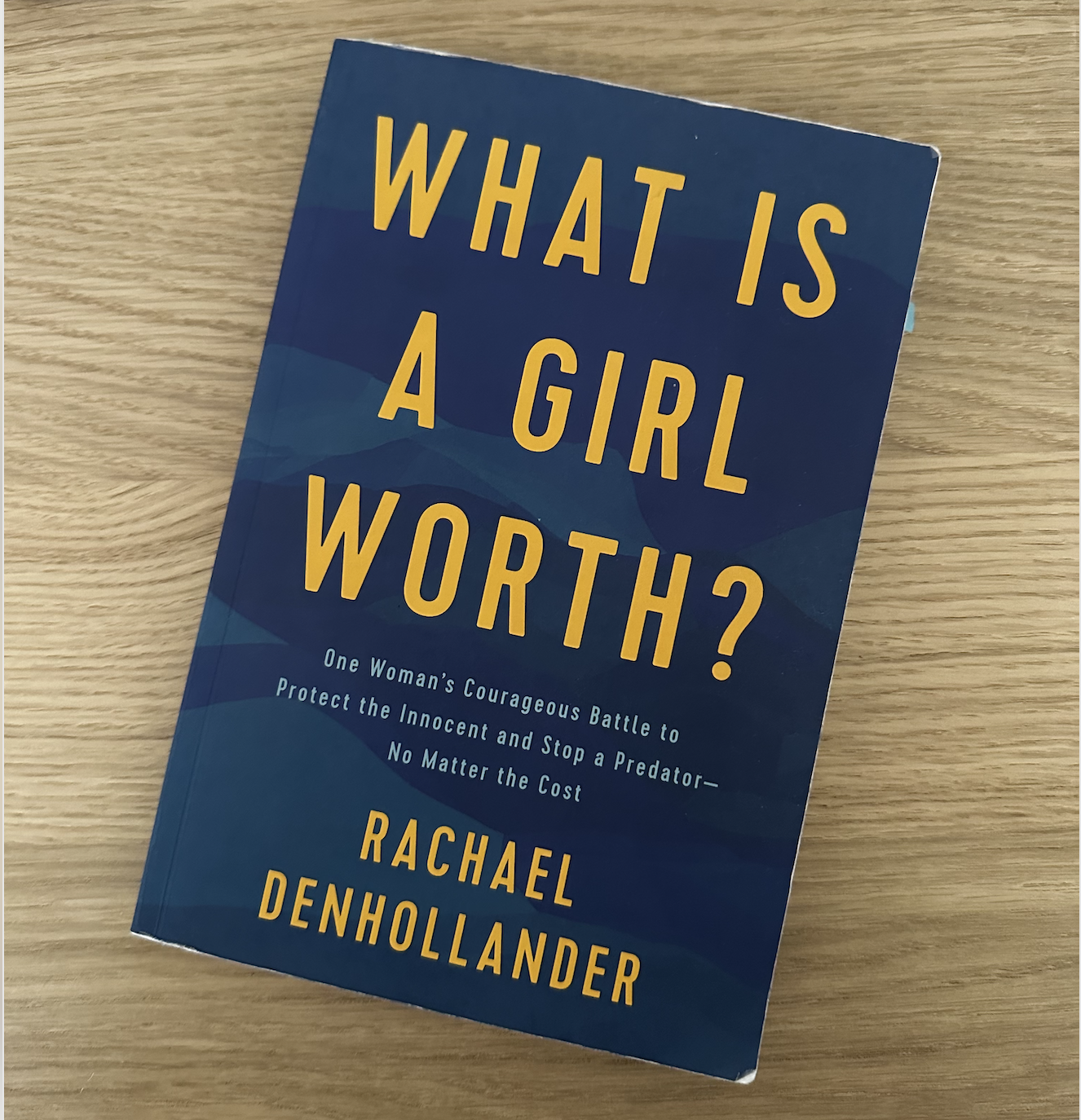
“[My mom] was protected because my dad loved.” (12, 6)
“Love sought to understand and communicate. Instead of lashing out at frustration at what I’d done, my mom had sought to reach me with love—without sacrificing the truth or leaving others unprotected.” (13, 4)
“Love cares first about the harm done to the otehr person. Unlike abuse, love does not excuse or minimize wrongdoing.” (14, 2)
“If they knew, they’d stop it, right? […] Someone would stop it. Someone would stop it. Right?” (26, 5)
“Someone would have stopped him. Wouldn’t they?” (38, 4)
“What just happened? […] What just happened? […] I could not reconcile the man I knew with the man who had just been touching me in places and in ways I was sure he shouldn’t.” (55, 4)
“though I’d failed at keeping him from my body, I could keep him from my mind.” (55, 9)
“Even thinking someone was a sexual abuser was an incredibly serious accusation.” (56, 1)
“the [pain] giving me something to focus on and use to orient myself” (56)
“words would make it so much more real” (60, 2)
“I chastised myself, repeating the same lies I’d heard society tell every sexual assault victim: Stop being overdramatic. It wasn’t that big of a deal. You’re reading into it and making it worse than it was. Why… Why couldn’t I just get over it?” (61, 2)
“Don’t trust. Ever. Period.” (61, 6)
“It was my fault” (63, 2)
“But sometimes an even more effective barrier to the truth is a community dedicated to an abuser because of what feels like a caring and good relationship” (71, 4)
“The thought of putting what I had experienced into words filled me with shame and fear.” (75, 1)
“I did everything I could to bury those thoughts. And when I couldn’t, I blamed myself.” (83, 6)
“I’m partly to blame. It was my fault. Both times. My fault.” (84, 8)
“I hadn’t masked my emotions well enough to hide my discomfort. I’d left myself vulnerable. Exposed.” (84, 10)
“You can’t keep burying it. It will destroy you.” (86, 2)
“It would mean admitting that the abuse had happened and that I wasn’t fine.” (86, 5)
“I wanted to be done with the fear and shame. I wanted to be done with the grief. I wanted to feel whole again.” (87, 6)
“Your fault! You didn’t fight back! Who is so stupid they don’t even know what’s happening? You didn’t protect yourself because you didn’t care enough! Your fault!” (89)
“I felt unsafe everywhere.” (92, 2)
“This was my fault. I hadn’t stopped the abuse, and that was my fault. I couldn’t stop the damage. My fault too.” (93, 3)
“The book of Psalms, in particular, helped me ride the waves of pain I couldn’t seem to escape” (95, 2)
“Rarely did society recognize the incredible damage of abuse, and I’d absorbed its minimizing message every day, blaming myself for the fear, the nightmares, and the anxiety.” (96, 2)
“The simplest things were now unsafe because I knew that even they could be wielded like a weapon.” (97, 1)
“I poured myself into my life […] But I also continued to bury the tears” (97, 3)
“fighting panic attacks every time I came across a sex-related case” (98, 2)
“The only thing of which I was certain was that everyone minimized the evil and damage from abuse” (99, 6)
“Nothing could make that wrong disappear” (103, 3)
“I began to realize […] how much of myself had truly been damaged” (109, 6)
“Those attributes would make me vulnerable” (love, compassion, gentleness) (110, 2)
“I knew there were men out there who could walk through the grief and pain alongside survivors, who could help them heal instead of hurt them” (113)
“Even to myself, I used euphemisms still. Words that I rarely thought, I would now have to speak.” (114)
“I could barely fight the war within myself. I had no ability, nor any desire, to fight it with the person I let closest to me.” (115, 2)
“How do you explain to someone who has never been that vulnerable that even though I wasn’t ‘held down’, I was still trapped?” (115, 5)
“You just… shut down, because reality is incomprehensible” (115, 7)
“It was never the hand in the dark. It was always the hand that I held. And it’s my fault all over again, because it never would have happened if I hadn’t trusted.” (116, 3)
“the internal war […] when someone’s actions don’t match the person they’re supposed to be” (116, 7)
“the scars remained. All I could do was respond to the damage.” (136, 5)
“grace that resulted in abusers being ‘forgiven’ while victims were silenced by being characterized as ‘bitter’” (140, 4)
“There simply was a complete inability to understand the evidence or the impact of abuse” (142, 3)
“Focus on the now. Be faithful with the now.” (145, 1)
“No one else had even bothered to ask why it mattered.” (146, 10)
“This was the first time I had ever described the abuse to anyone. […] I’d never put it into words” (151, 4)
“But the sick, burning feeling in the pit of my stomach remained” (152, 2)
“it wasn’t happening one thing at a time” (152, 10)
“It was the answer I never wanted but desperately needed” (153, 7)
“Justice is God’s work, Rachael. And I’m going to pray with you that you see it—as completely as we can reach it here on earth.” (154, 7)
“Each time, a rush of nausea and fear would follow” (155, 3)
“Grief, more than anything, was what I hated to show, because it felt so vulnerable” (163, 2)
“realize they weren’t alone—and they weren’t crazy” (165, 4)
“I was very confused, trying to reconcile what was happening with the person he was supposed to be” (166, 1)
“survivors could be unaware of what was happening to them, unable to trust their own instincts” (166, 3)
“I literally shut down to try to survive the reality” (166, 5)
“just go somewhere else mentally” (166, 4)
“You are not crazy. This. Is. Not. Your. Fault.” (166, 5)
“That night, the nightmares […] came back with a vengeance” (167, 8)
“I just figured that if this was a big deal, you’d… do something about it” (174, 9)
“There simply was no nice way to broach a topic like this” (178, 1)
“I was grateful for knowledgeable, direct, caring questions” (178, 9)
“I can only be faithful” (179, 2)
“I had no emotional, physical, or mental energy for anything other than my case” (182, 4)
“I thought the problem was me” (185, 1)
“I did need to eat. I just felt far too exhausted and sick to care” (191, 11)
“I wasn’t crazy. I hadn’t ever been crazy.” (194, 1)
“after being questioned so intensely about my abuse, I bristled at the thought of anyone touching me” (200, 5)
“a record of my pain so deep I’d never shown it to another person. I couldn’t even read it” (204, 1)
“Be present now. Be present now.” (205, 4)
“reminder that abuse follows you everywhere and that everyone pays the price”
“The emotional load of trying to switch back and forth was too much” (208, 3)
“innocent and trusting. The way all of us used to be” (211, 5)
“He could have been stopped. He could have been stopped.” (213, 4)
“I had nightmares every night, but keeping a protective wall up wasn’t an option” (214, 3)
“The more you love, the harder you fight” (217, 5)
“It was okay not to know what to do. It wasn’t okay not to ask what they could do.” (220, 11)
“giving them the tools to move themselves from victim to survivor” (222, 6)
“I was wrestling with the reality that full healing doesn’t ever come. I was still damaged […] I felt like I was drowning in the reality that, despite all the healing, the nightmares and flashbacks still came” (227, 1)
“love is the motivation that will give them joy and peace when doing the right hting is hard and hurts” (237, 1)
“She really, truly understood. […] I didn’t have to teach all of it. She already knew.” (245, 7)
“digging up memories, remembering painful details, and putting them into words” (247, 3)
“the shame only belongs on one person—the abuser” (249, 1)
“I want to be me for just one week” (250, 1)
“They need leaders who have integrity and passion to defend them—no matter who the abuser, and no mater who the enabler” (256, 7)
“I know where the shame and guilt for this lies. It lies on him. It does not lie on me, and I am not afraid of the truth.” (266, 13)
“To feel less alone and isolated in the fight” (267, 11)
“The only thing reporting accomplishes is heightening the trauma to almost unbearable levels. It invites an audience to view your sexual assault. It’s choosing to have no voice in the process after having it stolen from you. That’s why victims don’t report.” (271, 3)
“Members of our church actually knew what was going on and cared enough to ask.” (273, 2)
“She had done everything right. And it hadn’t been enough.” (276, 1)
“What do I do when I’m given a platform I never wanted to talk about an issue I don’t want to talk about?” (278, 1)
“Angie had asked what I’d needed. She’d listened. She’d given me a voice. It meant everything” (284, 5)
“How much is a little girl worth?” (291, 5)
“If I don’t get a chance to cry, I’m going to lose it at some point and not be able to stop” (295, 2)
“Most of us should never have had to be there” (300, 2)
“The farthest I can run from what you have become is to daily choose what is right instead of what I want” (307, 5)
“I pray you experience the soul-crushing weight of guilt so that you may someday experience true repentance and true forgiveness from God, which you need far more than forgiveness from me, though I extend that to you as well.” (310, 4)
“Who is going to tell them how much they are worth? How valuable they are, how deserving of justice and protection? Who is going to tell these little girls that what was done to them matters? That they are seen, and valued? That they are not alone and they are not unprotected?” (312, 4)