The Wounded Heart
by Dr. Dan B. Allender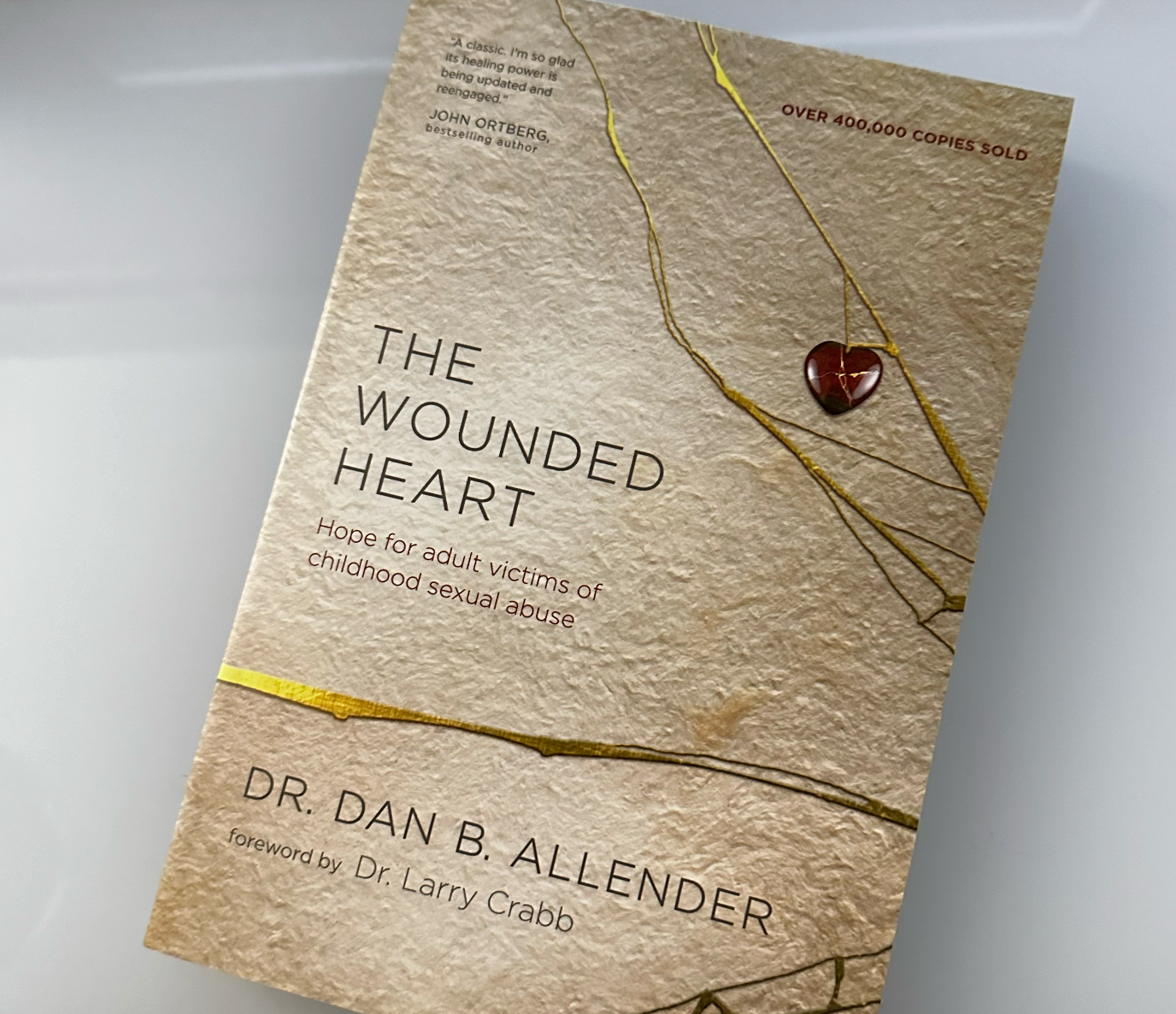
Prologue: The Quest for a Cure
“What must be done to lift the shroud of shame and contempt? The answer involves a strategy that seems to intensify the problem: peer deeply into the wounded heart.” (xvi, 1)
“It is unpleasant to face the consequences of sin—our own and others’. To do so seems to discount the finished and sufficient work of our Savior.” (xvi, 3)
“A central question in the mind of the abused person—“Where was God?”—compels many to answer by denying the influence of past events on present-day functioning. If the past is insignificant, then I don’t need to ponder the question, “Why did God not intervene?” The unbelieving world is willing to see the damage of abuse because it feels no need to defend the God who could have intervened to stop it.” (xvii, 5)
"”Where was God?” is a legitimate cry of the soul to understand what it means to trust God. Irrespective of the answers, the question is not to be avoided. If God is trustworthy, He can be trusted without our efforts to distort and deny the past.” (xviii, 2)
“Let us as Christians acknowledge without shame that regeneration does not alleviate, or in fact diminish, the effects of sin quickly or permanently in this life.” (xviii, 4)
“It is labor eminently worthy of every believer to reclaim the parts of one’s soul that remain untilled and unproductive for bearing fruit.” (xviii, 4)
“It appeared to be acceptable to use the court system for a damaged car, but not for a damaged soul.” (xix, 2)
“Under this version of Christianity, the abused person feels secure and dead. There is safety in soul-numbing rigidity that does not require thought, reflection, or risk.” (xix, 5)
“The argument of this book is that the best path is through the valley of the shadow of death. The crags of doubt and the valleys of despair offer a proving ground of God that no other terrain can provide.” (xxii, 2)
“The journey involves bringing our wounded heart before God, a heart that is full of rage, overwhelmed with doubt, bloodied but unbroken, rebellious, stained, and lonely. It does not seem possible that anyone can handle, let alone embrace, our wounded and sinful heart. But the path involves the risk of putting into words the condition of our inner being and placing those words before God for His response.” (xxii, 3)
“But promises have been made before by a supposedly trustworthy person, and we swore the betrayal was the last we would ever allow our soul to experience.” (xxii, 3)
“The obstacle to life is the conviction that our God will damage us and destroy us. The problem is that the path does involve His hurting us but only in order to heal us.” (xxii, 3)
“What is the enemy to the healing process? In brief, the answer is shame and contempt.” (xxii, 4)
“The stories of my friends cry out for healing, for justice, for the day when all tears will be wiped away and all wrongs avenged.” (xxiii, 3)
Part One: The Dynamics of Abuse
[Chapter 1] the reality of a war: facing the battle
“The process of entering the past will disrupt life—or, at least, the existence that masquerades as life. The ease of quiet denial that allows the person to be a pleasant but vacuous doormat or an articulate but driven Bible study leader will be replaced by tumult, fear, confusion, anger, and change.” (4, 4)
“What is the point in pursuing firm hope and lively joy? The answer is simple: to live out the gospel. The reason for entering the struggle is a desire for more, a taste of what life and love could be if freed from the dark memories and deep shame.” (5, 3)
“To honor what God has called us to be is the reason a man or woman chooses the path of change.” (6, 2)
“There is a deep reluctance to begin the process of change by admitting that damage has occured.” (7, 2)
“the potential for minimization or feeling weird for being damaged makes the potential for change even more difficult for those more subtly abused than for those more severely abused.” (10, 3)
“Betrayal by an intimate, deeply trusted companion is almost too much for the soul to endure. The victim does not want to face that the perpetrator may have been a person with access to the deepest recesses of his or her soul, a bearer of a key that no one else possessed.” (13, 3)
“The fearful and fallen heart does not want to anguish over the loss of safety and nurturance; therefore, the damage is seemingly diminished in the relief that the perpetrator was not someone closer or that the damage could have been more severe.” (13, 3)
“All excuses should be silenced; the perpetrator committed a crime against the abused person’s body and soul.” (14, 2)
“But in every case of abuse, the dignity and beauty of the soul have been violated.” (14, 3)
“damage will be in direct proportion to the degree that it disrupts the protection and nurturance of the parental bond.” (14, 4)
“When abuse is perpetrated, it sets into motion the tremors of an internal earthquake that requires a strong and nurturant environment to quell.” (14, 4)
“The victim’s struggle to trust will be proportionately related to the extent her parent(s) failed to protect and nurture her as a child.” (15, 2)
[Chapter 2] Facing the Enemy: Shame, Brokenness, and Sanctification
“The enemy, or so it feels, is the passion to be lovingly pursued and nourishingly touched by a person whose heart is utterly disposed to do us good.” (19, 2)
“The enemy is sin, that fallen, autonomous striving for life that refuses to bow to God. The enemy is the internal reality that will not cry out to God in humble, broken dependence.” (19, 4)
“The enemy is […] a determined, reliable inclination to pursue false gods, to find life apart from dynamic, moment-by-moment relationship with the Lord of life.” (19, 5)
“To understand the depth and extent of sin is the comprehend that our motives, as fallen but regernate beings, are stained by sin, even as we attempt to honorably love God and others. The glory of the Cross is that in spite of every act, thought, or feeling being stained by the Fall, our regenerate deeds are cleansed under the righteousness of our Elder Brother’s sacrifice.” (22, 1)
“Shame: the dread of being known” (22, 3)
“Unlike other feelings that relinquish some of their power by putting words to the inner sensation, shame has the propensity to increase in intensity when it is first acknowledged.” (23, 2)
“Legitimate shame exposes depravity, and illegitimate shame shines a light on some element of dignity.” (27, 1)
“Her dignity was assaulted, and the horror of the abuse was intertwined with the hunger for an advocate who would tenderly wash her wounds and comfort her.” (28, 4)
“Longings and shame were wed to her sense of being a woman whose only worth was being used for someone else’s pleasure.” (28, 5)
“A godly response in the face of abuse is to grieve—for the perpetrator’s sin and for the damage done to our soul; but the natural response is to cower in shame, condemning our own soul for being so foolish as to hope, want, or risk.” (29, 1)
“It is the terror that if our dark soul is discovered, we will never be enjoyed, nor desired, nor pursued by anyone.” (31, 5)
“Trust is a giving of our soul to another with the hope that we will not be harmfully used. Such trust invests in another the power to determine whether or not we are acceptable and desirable. When trust, defined as an empowering of another to determine our desirability and worth, is absent, shame is usually not experienced, even with exposure of our dignity or depravity.” (32, 3)
“Shame is experienced before the one I’ve entitled or given the right to judge me. […] To give that privilege […] to anyone other than God is idolatry.” (32, 4)
[Chapter 3] Deflection: The Clash with Contempt
“Shame is a phenomenon of the eyes. The eyes usually drop and the shoulders slump when one feels shame.” (39, 3)
“The first option, self-contempt, and the second, other-centered contempt, though different in form, are similar in function.” (39, 3)
Very severe contempt (physically destructive): “Very severe contempt is seen in a desire to do physical harm to oneself or another. It is the desire to destroy, or at least damage through wanton disregard, the physical needs and limits of the human frame. […] the body is punished for existing and wanting.” (40, 4)
` `
Moderately severe contempt (personally destructive): “Violent thoughts, words, or images are like a slashing knife that bleeds the soul of life.” (41, 3)
` `
Mildly severe contempt (critically evaluative): “The sexually abused woman often finds ample opportunity to destroy her enjoyment of being a woman through negative evaluations of her face, body, clothing, or manner of relating—especially in light of comparisons to other women. An attractice woman may harbor deep hatred for her own body and still be criticially evaluating the beauty of rivals.” (42, 3)
` `
Least severe contempt (relationally uncomfortable): “The first stirring of aliveness or passion in contact with another feels like a venom that may take both parties into a destructive spiral of lust or revenge.” (43, 2)
“Contempt, in any form, operates for a purpose: almost always to protect the user from damaging others or replicating the past abuse that wounded her soul.” (43, 2)
“Contempt serves us in at least four ways: It diminishes our shame, it deadens our longings, it makes us feel in control, and it distorts the real problem.” (44, 2)
` `
diminishes shame:”Contempt either blinds the eyes of the observer (other-centered contempt) or turns the eyes of the one shamed away from the one who has observed (self-contempt). In either case, the effect is the same: The intense experience of shame has been diminished.” (44, 3)
` `
deadens longings: “For the woman or man who has been abused, one of the greatest enemies of the soul is the longing for intimacy.” (45, 2)
` `
“To feel good in a relationship with another, like no other experience, opens the door to past horror and future terror.” (45, 2)
` `
“Many women who have been abused end up in tragic relationships in which they are revictimized. One factor involed in that choice is the unconscious commitment to find people who will guarantee loss, so that hope is never deeply stirred.” (45, 4)
` `
“As long as I turn my condemnation against myself, I block the potential of your movement toward me and my longing for you to care.” (45, 5)
` `
provides the illusion of control: “As long as I believe there is something I can do about my problem, then I am not constrained to feel hopeless. A contemptuous explanation provides a direction to pursue to regain control over my emptiness.” (47, 3)
` `
distorts the real problem: “Self-contempt in particular is Satan’s counterfeit for conviction over sin.” (48, 3)
` `
“Those deficiencies do not get to the heart of his radical selfishness that protectived him from responding to her rage.” (48, 4)
[Chapter 4] The War Zone: Strategies for Abuse
“Chances are, however, that the two factors that are essential to a happy home were absent in the victim’s. The first factor is a sense of being enjoyed for who one is rather than for what one does. Many abuse victims were enjoyed for being the adultified child, but that kind of appreciation leaves the hungry heart untouched. A second factor is a respect of one’s being that permits the opportunity to develop uniqueness and separateness from other members of the family.” (53, 3)
“It is typical for the abused daughter to be singled out, often before the abuse, as the one who is expected to function as a “little adult.”” (53, 4)
“When asked why she did not tell her mother, she quietly sighed, “It would have meant months of picking up the pieces. I felt as if I had enough to cope with in saying no to the abuser.”” (54, 1)
“Many abused individuals were never granted privacy of space, let alone thought or feeling.” (54, 5)
“The denial or rejection of emotions or thoughts violates the privacy and sanctity of a child’s inner world. A child likely will question the validity of her perception, making the cost of trusting her intuition exorbitantly high.” (55, 2)
“So far, the home of the victim has produced relational hunger, a sense of being needed but nevertheless demeaned, while making it difficult for the child to trust her perceptions and feelings.” (55, 3)
“The scene is set for abuse. The child is (to some degree) empty, alone, committed to pleasing, boundaryless, burdened, and bound to a family or a parent whose desire becomes the bread of hope for the hungry child. The two key words are empty and dependent.” (55, 4)
“Soul deadness–or a heart dulled to its own pain—and a hypervigilant, poised alertness are not compatible partners in the dance of life. In order to live in the inherent contradiction, the child or adolescent must develop a split between the two (or more) antithetical positions, thus existing as two different people: an inner person who quietly and unobtrusively stores what is most precious away from the sight of a dangerous world; and a public person who adopts the manner, dress, voice,and face that others who distribute the bounty of life to be displayed.” (56, 2)
“Survivial requires fitting in, and to fit in means to live a life of torment. The experience of being profoundly used and let down by someone we trusted and relied on sears the hope that relationship can be purely enjoyed.” (56, 3)
“Such compliance falsely implicates her as a willing participant in her own demise. The advantage in understanding hte process of abuse is that it frees the abused person from unnecessary guilt for compliance and offers categories for understanding events that evoked confusion and contempt.” (56, 3)
Stages of Sexual Abuse:
Stage 1: Development of Intimacy and secrecy
“It must be remembered that the setup itself, even if the abuser never moves beyond Stage 1 (though it is rare for him not to), is severely damaging to the victim’s soul.” (58, 3)
“The kindness is cruelty; the warmth, violating. But the unsuspecting child or adolescent feels relationally alive and nourished, as he or she has never been before.” (58, 4)
“Secrecy, at least at first, is confined to the privileges of intimacy and deepens the “special” relationship that is beginning. Consequently, the victim tastes the first luscious vite of grace, a free gift of life with no obligation to perform. The result will be increased hope and hunger, a dropping of ancient defenses, a sprightly responsiveness that brings to the soul the first sense of femininity or masculinity.” (59, 2)
“Stage 1 produces a desire for more, a hope that spring is ahead.” (59, 3)
“Relational pleasure in enhanced through the bonding of secrecy and privilege.” (59, 3)
Stage 2: Physical Contact That Appears Appropriate
“Touch enhances the pleasure of relational bonding, and relational intimacy gives meaning and vibrancy to physical contact.” (60, 1)
“The child or adolscent’s desire for physical touch is not in any shape or form sexual” (60, 2)
“The gentle, relational touch quiets the soul and invites the recipient to relax in the warm strength of another; pleasure, comfort, nourishment, and trust are wedded together in a delightful mixture that deepens and sweetens the taste of life and passion.” (60, 4)
“The memories of this stage are hard for the abuse victim to recall without an awful combination of shame and confusion.” (61, 2)
“Whether the tender touch occured before or after the physical abuse, in many cases the effect will be the same: comfort and enjoyment. And the questions remain: “Why did I allow myself to trust?” “Why did I allow myself to want a man who would [or did] abuse me?”” (61, 4)
“When the overt sexual abuse occured, she was already silenced by her sense of complicity. Didn’t she enjoy the privilege? Hadn’t she responded to the closeness of the nonsexual touch? She was framed, and she accepted the penalty of her supposed crime.” (62, 2)
Stage 3: Sexual Abuse Proper
“Sexual abuse is the final blow that sabotages the soul in a climactic betrayal, mocking the enjoyment of relationship and pouring contempt on the thrill of passion.” (63,3)
“The tragedy of abuse is that the enjoyment of one’s body becomes the basis of a hatred of one’s soul.” (64, 1)
“It is difficult to describe the paradoxical experience of ambivalence. To have one strong emotion (terror) and another equally powerful feeling (desire) seems inconceivable.” (64, 3)
“The confluence of antithetical emotional currents makes the victim feel powerless, crazy, and ashamed.” (65, 1)
“The horror of Stage 3 psychological interaction is its wicked subtlety. It often lingers quietly in the mind of the victim as a gift rather than a violation.” (66, 4)
Stage 4: Maintenance of the Abuse and Secrecy through Threats and Privileges
“Unlike the first stage, however, the glory days are gone forever.” (67, 3)
“The child that is set apart for abuse is usually hated for his or her privileges by the other siblings. The child who feels different because of the abuse is then even further alienated due to the sibling jealousy.” (68, 2)
“The silence and continued compliance intensifies the victim’s resolve to deaden all feelings and find some way to endure, to survive the assault of his or her soul.” (68, 3)
“Victims often concoct an image of the past as tranquil and happy until it actually becomes true in their mind. The illusion of a good home and loving parents satisfies the curiosity of others and quiets the crippling pain of the past.” (68, 4)
“The victim’s effectiveness in the world doesn’t compare to the power the Spirit of God could produce if her heart was His.” (69, 1)
Part Two: The Damage of Abuse
` `
#####
` `
#####